An FCI project · placements across Canada

Real city problems. Solved with students.

CIVIC places students, faculty and partners inside Canadian municipalities to work on real problems under real constraints. Then it does the thing most placement programs never do: it brings them back, captures what they learned in a white paper and puts that fix in front of every other city facing the same problem.

CIVIC stands for city innovation via internships and co-op.

Drag a tile off the rack. They bump, they fall, and a fresh one drops in.

0%

of Ontario municipal employees entered the sector through a student co-op or internship.

0%

of those who came in through a co-op have stayed in the sector for 11 years or more.

Source: AMO Municipal Employee Survey, November 2023. Nearly 2,400 Ontario municipal employees, self-selected.

What CIVIC is

A work term inside a municipality.

CIVIC stands for city innovation via internships and co-op. It embeds students, faculty members and partners directly into municipal, community and industry organizations across Canada, where they work on live operational and policy problems from the inside.

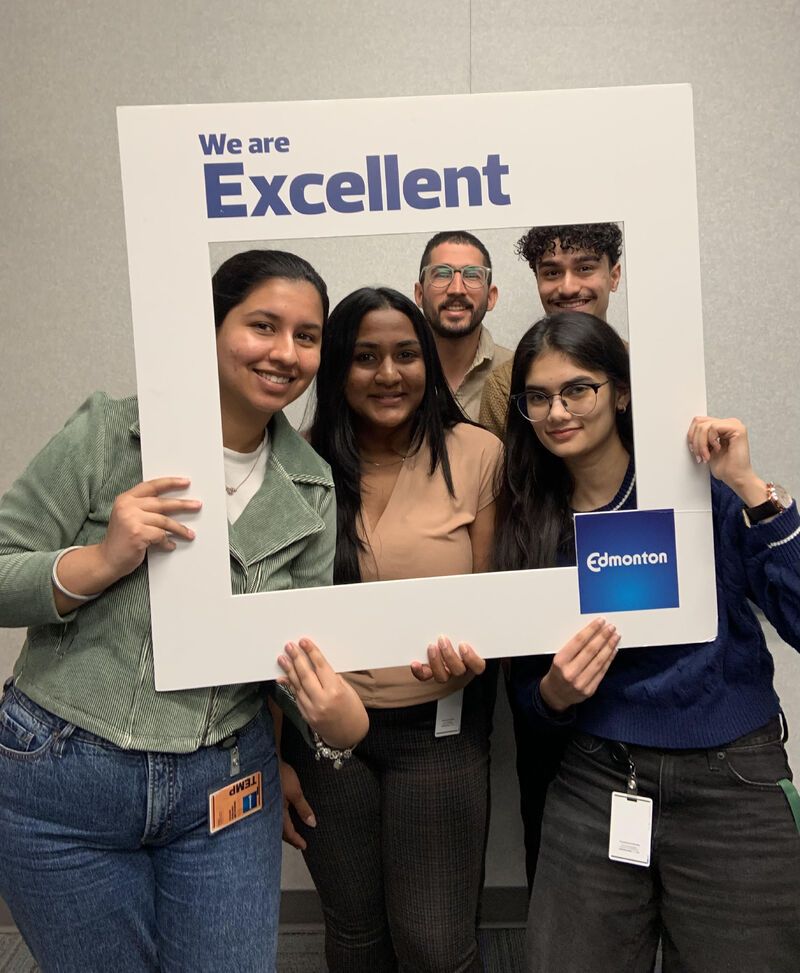
Preethi Raghuraman and City of Edmonton team members holding a We are Excellent photo frame
Preethi Raghuraman, the first CIVIC student, joined the City of Edmonton to work on SmartShift, replacing a manual seasonal staffing process in Parks and Roads Services with an automated one.

The loop

Not a pipeline. A loop.

Most placement programs are one-way: a student goes out, does good work and the knowledge stays wherever they left it. CIVIC runs on a loop. Follow it around once.

In the field Back at Waterloo

Scroll to ride the line, or click a station

Station 01

Embed

A student, faculty member or partner joins a municipal, community or industry team somewhere in Canada. Not a satellite project and not an observer role. A desk inside the organization, with the same deadlines as everyone around it.

In the field
Station 02

Work the problem

The work is shaped by the constraints that shape everything a municipality does: budgets, bylaws, procurement rules, legacy systems, council timelines. If a solution cannot survive those, it is not a solution yet. That is the point of being there.

In the field

Station 03

Return

When the placement ends, the person comes back to FCI at the University of Waterloo. This is the turn most programs never make. What was learned does not stay behind in one inbox in one city. It comes home with them.

The turn

Station 04

Download

Back on campus, they pair with a planning student and unpack the placement together: what the problem actually was, what worked, what broke and what another municipality would need to know before trying the same thing.

Back at Waterloo

Station 05

Publish

Together they write a white paper. Not a reflection essay. A working document that names the problem, the constraints and the fix, written plainly enough that a city that was never involved can pick it up and act on it.

Back at Waterloo

Station 06

Scale

Other municipalities adopt what the paper describes. Adoption surfaces new problems, and new problems open new placements. The loop starts again, somewhere else on the map. That is the whole design: nothing learned once stays learned once.

Outward, then around again

Why placements

Built to be used, not admired

CIVIC is after the practical fix that gets put into practice and leaves a community better than it was. No pomp, no circumstance, no report that sits on a shelf. Every placement is held to three tests.

Does it really work?

Every idea is shaped by the host's operating conditions: what the budget allows, what the bylaw permits, what the software can actually do. Constraints are design inputs, not obstacles.

If it can't survive procurement, it isn't finished.

Will they actually use it?

Solutions are co-developed with the practitioners and residents who will live with them: the clerk who runs the process, the crew that drives the route, the counter staff who answer for it.

If they won't use it, it doesn't ship.

Would another city adopt it?

The measure of a placement is not novelty. It is whether the work holds up inside the host, whether it can scale beyond it and whether a municipality that was never in the room would pick up the paper and act on it.

If it only works once, the loop isn't closed.

Placements

Where the loop has run

Every node is a placement: a person embedded in a municipality, working a real problem. Select one to see who went, what they worked on and where the white paper landed.

Select a node on the map to see its placement.

Map data: Natural Earth. Placements are added as they are confirmed.

Success stories

What came back

A CIVIC story is not finished when the placement ends. It is finished when the paper exists and another city can act on it. Here is the first one, still in the loop.

Preethi Raghuraman with the City of Edmonton Parks and Roads Services team
Preethi Raghuraman, the first CIVIC student, with the Parks and Roads Services team in Edmonton.

Edmonton, AB → Waterloo

SmartShift

An automated seasonal staffing system for the City of Edmonton's Parks and Roads Services branch. It replaces a manual process that could not balance operational needs, collective agreement requirements and employee preferences at the same time.

White paper library

The paper is the product

Every completed loop produces one of these: a plain-language working document, co-written by the person who was embedded and a planning student, built for municipalities that were not in the room. The first one is being written now.

Get notified when it publishes
WP-000 · CIVIC WHITE PAPER

SmartShift: automating a seasonal staffing decision

MunicipalityCity of Edmonton, Parks and Roads Services
ProblemA manual seasonal staffing process that could not balance operations, the collective agreement and employee preferences at once
PlacementPreethi Raghuraman, CIVIC student, embedded with the City of Edmonton
Written for any city with the same problemfciprojects.ca/civic

Get involved

Three ways into the loop

CIVIC needs people willing to be embedded, researchers with questions worth testing and organizations with problems worth solving. Pick your door.

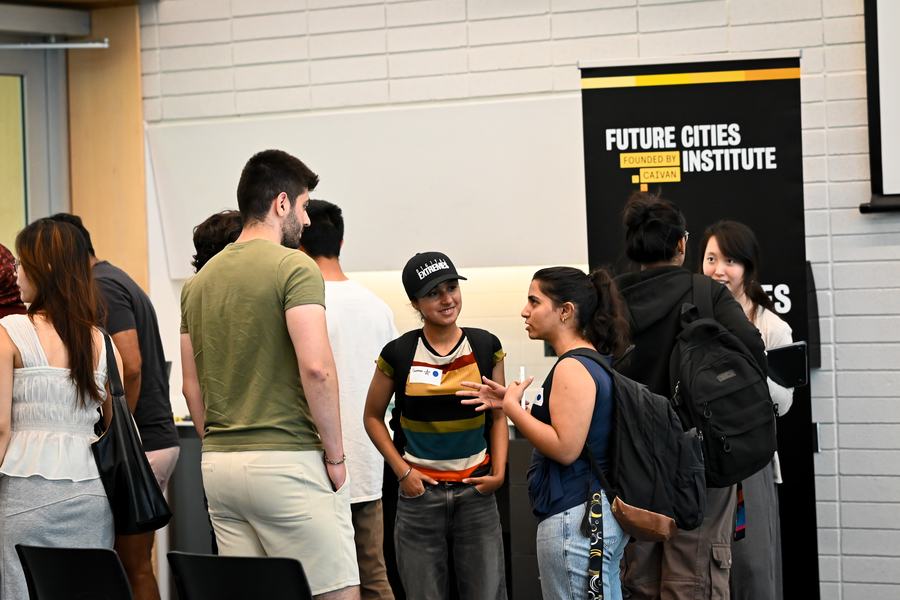
A CIVIC student presenting alongside teammates in front of a Future Cities Institute banner

Students

Spend a co-op or internship term inside a municipality, working a problem that matters to the people who live there.

  • Real operational experience, not shadowing
  • Your name on a published white paper
  • A working network in Canadian local government
Apply as a student
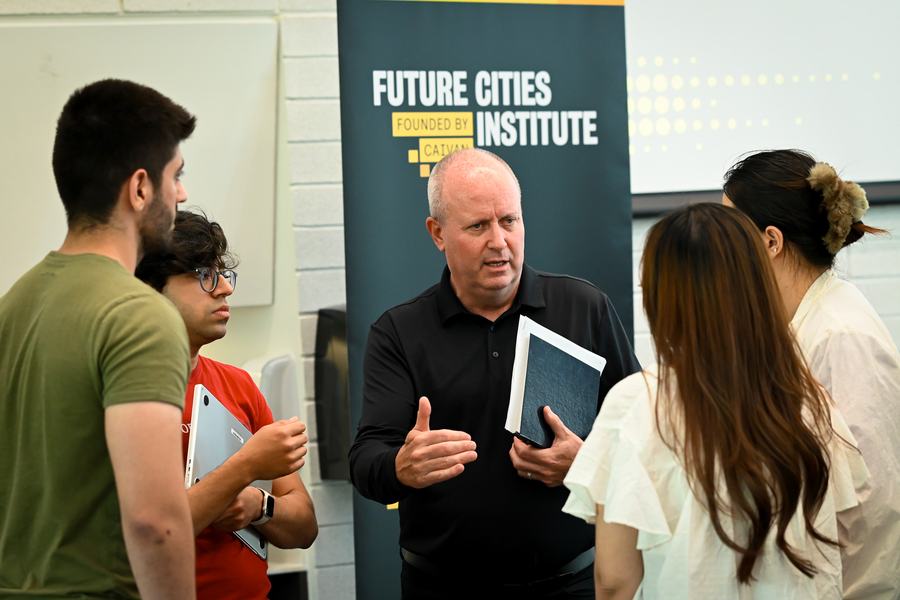
A faculty member speaking with students in front of a Future Cities Institute banner

Faculty

Use a placement as a field site. Test your research where the constraints are real and the results have to hold up in practice.

  • Validation environments for applied research
  • Co-authorship on white papers with reach
  • Standing relationships with municipal partners
Talk to FCI
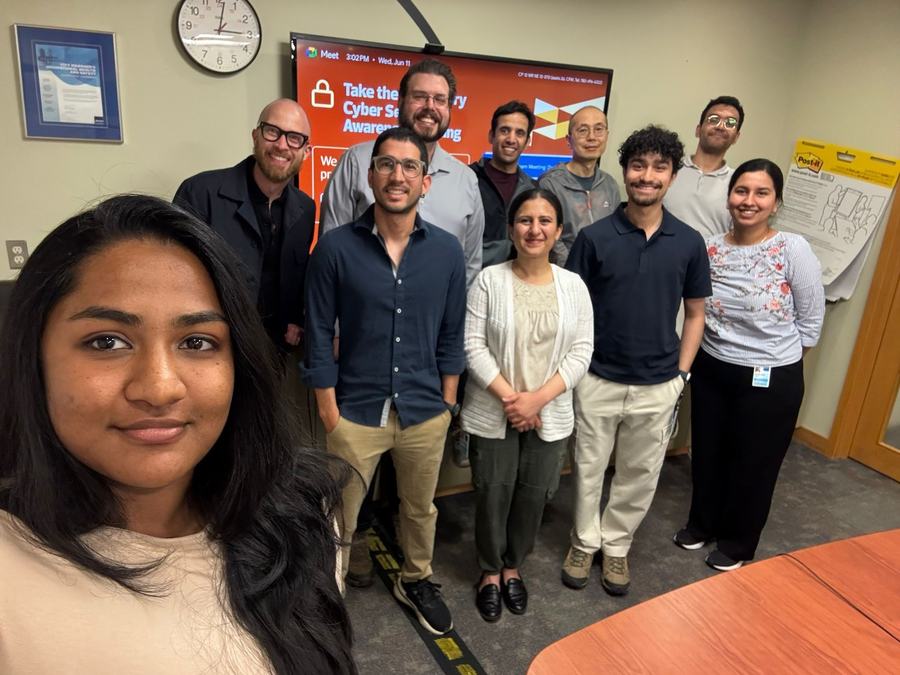
A municipal team gathered around a shared screen during a project meeting

Municipal and industry partners

Host a placement. Get embedded capacity on a problem you already have, and a documented fix your peers can reuse.

  • A motivated person inside your team for a term
  • A white paper your council and peers can cite
  • First look at what other municipalities solved
Host a placement

Stay in the loop

Follow the work as it happens.

Tangible impact and events worth showing up to. Join our monthly newsletter and partner with us to shape resilient cities and communities.

* Required. The FCI newsletter, monthly. Unsubscribe any time. We do not share your address.